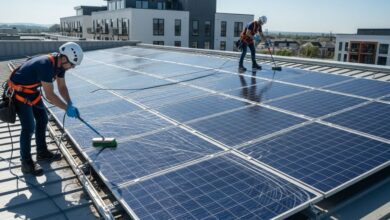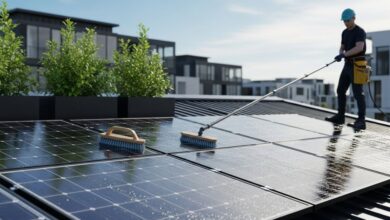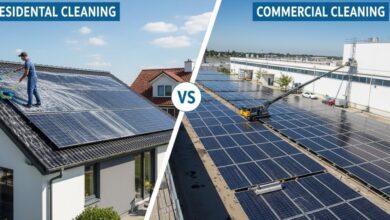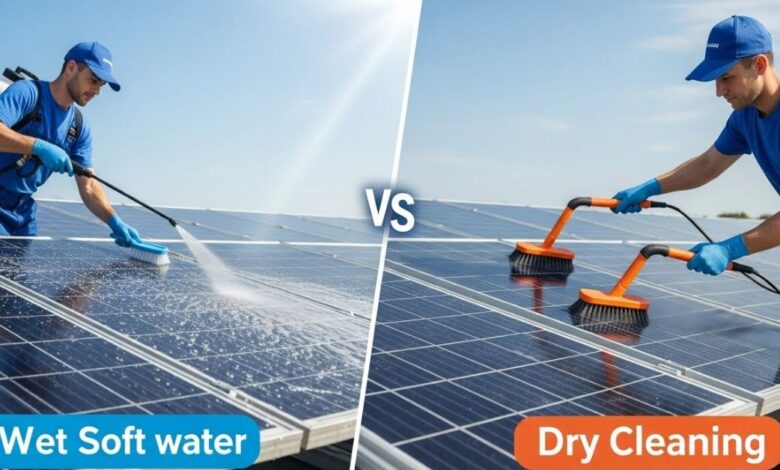
Solar panels are a long-term investment designed to produce clean energy efficiently for 20–25 years or more. However, their performance heavily depends on regular cleaning. Dust, bird droppings, pollution, pollen, and other debris can significantly reduce energy output. Two of the most common cleaning methods are water-based solar panel cleaning and dry solar panel cleaning.
This article explains both methods in detail, compares their advantages and disadvantages, and helps you decide which option is best for your solar system.
Why Solar Panel Cleaning Matters
Even a thin layer of dust can block sunlight and reduce solar panel efficiency by 5% to 30%, depending on environmental conditions. In dusty or polluted regions, such as urban and industrial areas, regular cleaning is essential to maintain optimal power generation and system longevity.
What Is Water-Based Solar Panel Cleaning?
Water-based cleaning involves washing solar panels using water, soft brushes, microfiber pads, or low-pressure spray systems. In some cases, deionized (DI) or purified water is used to prevent mineral spots and residue.
How It Works
- Panels are gently rinsed with water
- Soft brushes remove stuck dirt and bird droppings
- Purified water dries without leaving stains
- No harsh chemicals are used
Advantages of Water-Based Cleaning
- Highly effective at removing heavy dirt and grime
- Safe for panel glass when done correctly
- Improves energy output quickly
- Ideal for areas with high dust, pollution, or bird activity
Disadvantages of Water-Based Cleaning
- Requires access to clean water
- Not suitable during freezing temperatures
- Improper pressure can damage panels
- Slightly higher cost due to water usage and equipment
What Is Dry Solar Panel Cleaning?
Dry cleaning uses specialized soft brushes, microfiber cloths, electrostatic tools, or robotic systems without water. This method is mainly used in water-scarce regions or for light dust removal.
How It Works
- Dry brushes or cloths sweep dust from panels
- Electrostatic tools attract and lift particles
- No moisture or liquid involved
Advantages of Dry Solar Panel Cleaning
- No water required, eco-friendly option
- Suitable for deserts and drought-prone areas
- Quick and convenient for frequent maintenance
- Lower risk of water-related electrical issues
Disadvantages of Dry Solar Panel Cleaning
- Less effective on sticky dirt and bird droppings
- Risk of micro-scratches if improper tools are used
- Not ideal for heavily soiled panels
- Requires frequent cleaning cycles
Water-Based vs Dry Cleaning: Key Differences
| Feature | Water-Based Cleaning | Dry Cleaning |
|---|---|---|
| Cleaning effectiveness | High | Moderate |
| Water usage | Required | Not required |
| Best for heavy dirt | Yes | No |
| Environmental impact | Moderate | Low |
| Risk of scratches | Low (with soft tools) | Medium (if poorly done) |
| Maintenance frequency | Less frequent | More frequent |
Which Method Is Better for Your Solar Panels?
The best cleaning method depends on location, climate, and panel condition.
Choose Water-Based Cleaning If:
- Panels are heavily soiled
- You live in polluted or dusty urban areas
- Bird droppings and sticky residue are common
- Maximum efficiency recovery is required
Choose Dry Cleaning If:
- You live in a water-scarce region
- Panels only have light dust
- Regular, frequent maintenance is planned
- Environmental water conservation is a priority
Safety and Best Practices
- Always clean panels during early morning or evening
- Avoid harsh chemicals and abrasive materials
- Use low-pressure water only
- Follow manufacturer cleaning guidelines
- Consider professional cleaning for rooftop or large systems
Cost Comparison
Water-based cleaning typically costs more due to labor, water, and equipment, but it delivers better performance improvement. Dry cleaning is more affordable and sustainable but may not fully restore output for dirty panels.
Final Thoughts
Both water-based and dry solar panel cleaning methods have their place in proper solar maintenance. Water-based cleaning offers deep and thorough results, while dry cleaning provides a sustainable solution for light dust and water-limited environments.
For best results, many solar owners combine both methods—using dry cleaning for routine upkeep and water-based cleaning for periodic deep cleaning. Proper cleaning not only boosts energy production but also protects your investment for years to come.