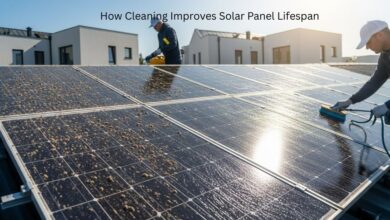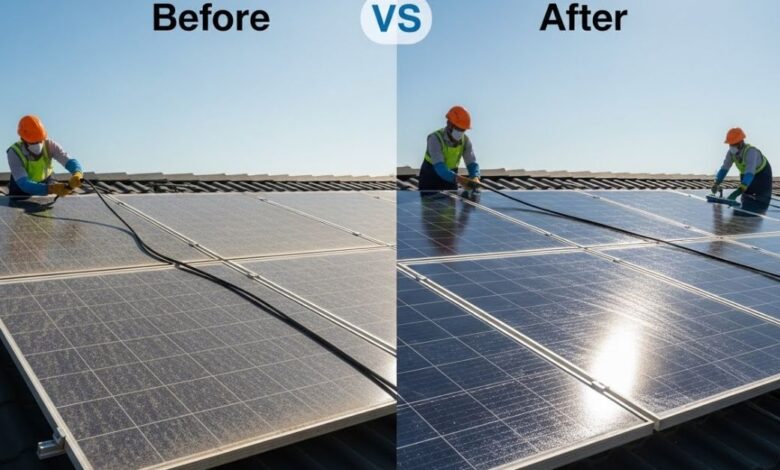
Solar energy systems are designed to deliver long-term savings and sustainable power. However, many solar panel owners overlook a critical factor that directly affects performance—cleanliness. Dust, dirt, bird droppings, pollen, and pollution gradually accumulate on panel surfaces, reducing their ability to absorb sunlight. Understanding solar panel efficiency before and after cleaning helps homeowners and businesses realize why regular maintenance is essential.
What Is Solar Panel Efficiency?
Solar panel efficiency refers to how effectively a panel converts sunlight into usable electricity. It is usually measured as a percentage of sunlight converted into energy. Even high-quality panels can suffer efficiency losses if their surface is obstructed.
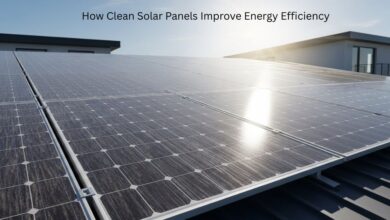
Clean panels allow maximum sunlight penetration, while dirty panels block light and reduce power generation.
Solar Panel Efficiency Before Cleaning
Before cleaning, solar panels often operate below their optimal capacity. The degree of efficiency loss depends on location, climate, and exposure to contaminants.
Common Causes of Efficiency Loss
- Dust and sand (especially in dry or desert regions)
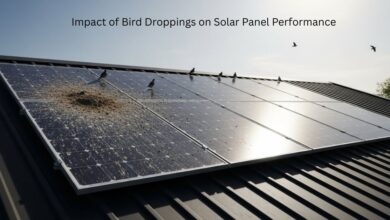
- Bird droppings
- Leaves and pollen
- Air pollution and smog
- Salt residue in coastal areas
Typical Power Loss
Research and field data show that dirty solar panels can lose:
- 10–15% efficiency in mild conditions
- 20–30% or more in dusty, polluted, or agricultural areas
In extreme cases, heavily soiled panels may produce nearly half their expected output.
Solar Panel Efficiency After Cleaning
After professional or proper cleaning, solar panels are restored closer to their original performance levels. Clean surfaces allow sunlight to reach photovoltaic cells without obstruction.
Efficiency Improvements After Cleaning
- Immediate increase in energy output
- 10–30% recovery in lost efficiency
- More consistent daily power generation
- Improved system reliability
Many users notice higher inverter readings and reduced electricity bills soon after cleaning.
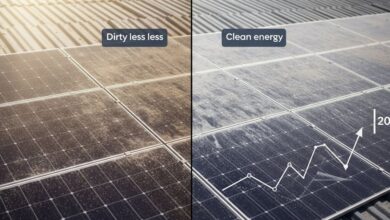
Before vs After Cleaning: Efficiency Comparison
| Condition | Power Output | Overall Efficiency |
|---|---|---|
| Dirty Panels | Reduced sunlight absorption | Low to moderate |
| Clean Panels | Maximum sunlight exposure | High and stable |
This comparison clearly shows that cleaning plays a direct role in maintaining peak solar panel efficiency.
How Often Should Solar Panels Be Cleaned?
The ideal cleaning frequency depends on environmental factors:
- Urban areas: Every 4–6 months
- Dusty or agricultural areas: Every 2–3 months
- Coastal regions: Every 3–4 months
- After storms or heavy pollution events: As needed
Regular inspections help determine the right schedule.
DIY Cleaning vs Professional Cleaning
DIY Cleaning
- Suitable for ground-mounted or easily accessible panels
- Requires soft brushes, purified water, and safety precautions
- Risk of scratching or improper cleaning if done incorrectly
Professional Cleaning
- Uses specialized tools and deionized water
- Ensures safety for roof-mounted systems
- Delivers more thorough and damage-free results
Professional services often provide better efficiency recovery.
Long-Term Benefits of Clean Solar Panels
Keeping panels clean offers more than short-term gains:
- Higher lifetime energy production
- Faster return on investment (ROI)
- Lower strain on the system
- Extended panel lifespan
- Consistent peak performance
Regular cleaning protects both performance and financial returns.
Environmental and Financial Impact
Dirty panels waste sunlight, forcing users to rely more on grid electricity. Clean panels:
- Reduce carbon footprint
- Increase renewable energy usage
- Lower monthly energy bills
- Improve overall sustainability
A simple cleaning routine can have a meaningful environmental impact.
Final Thoughts
The difference in solar panel efficiency before and after cleaning is significant. Dust and debris can quietly reduce power output, while proper cleaning restores efficiency and maximizes energy generation. Whether for residential rooftops or large commercial installations, clean solar panels are essential for achieving optimal performance.
Regular maintenance ensures that your solar investment continues to deliver clean, reliable, and cost-effective energy for years to come.