Solar energy is becoming increasingly popular among commercial and industrial properties due to its sustainability and long-term cost benefits. Large rooftop solar installations, often spanning thousands of square feet, play a crucial role in reducing energy costs and carbon footprints. However, maintaining peak efficiency for such expansive systems requires regular cleaning and maintenance. Neglecting this essential task can lead to significant energy losses and reduced system lifespan.
Why Cleaning Large Rooftop Solar Systems Is Crucial
Solar panels generate electricity by converting sunlight into energy, but any obstruction—dust, dirt, bird droppings, leaves, or pollution—can reduce their efficiency. For large rooftop systems, even a small layer of debris can cause:
- Energy Loss: Studies show that dirty solar panels can lose up to 25% of their energy output.
- Hotspots: Accumulated debris can create areas of high temperature, potentially damaging cells.
- System Wear and Tear: Prolonged neglect can stress inverters and other components due to inconsistent energy output.
- Reduced Lifespan: Regular cleaning helps maintain optimal panel performance, extending the system’s operational life.
Factors Affecting Cleaning Frequency
The frequency of cleaning depends on several environmental and operational factors:
- Location: Rooftops in urban areas may accumulate dust and smog, while rural areas may have pollen, bird droppings, or agricultural residues.
- Weather Conditions: Regions with frequent rain may require less frequent cleaning, while dry or dusty climates need more attention.
- Panel Tilt and Orientation: Panels installed at a steeper angle may naturally shed debris more efficiently than flat systems.
Typically, large rooftop systems are cleaned 1–3 times per year, but high-pollution or dusty regions may require quarterly cleaning.
Best Practices for Cleaning Large Rooftop Solar Panels
Cleaning a large-scale solar rooftop system is more complex than residential panels due to its size, safety considerations, and potential for damage. Here are best practices:
1. Use Professional Cleaning Services
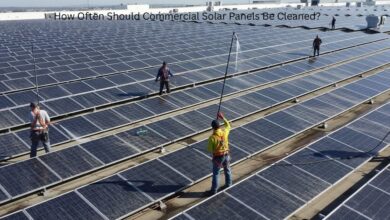
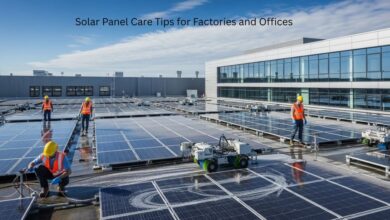
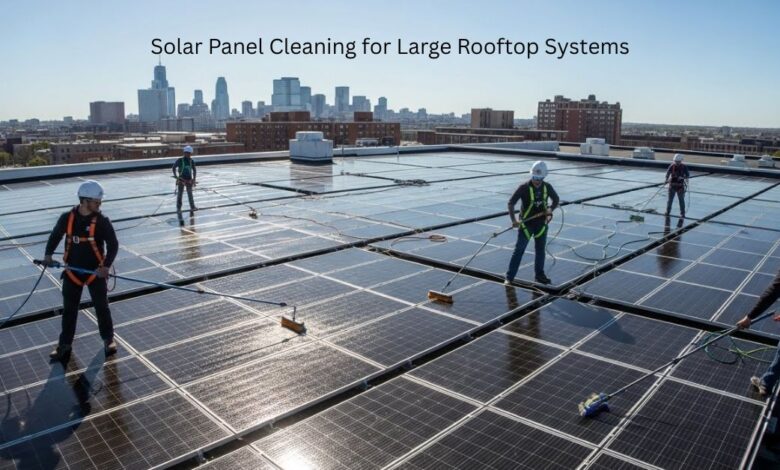
Hiring trained technicians ensures safe and effective cleaning. Professionals use specialized tools such as telescopic brushes, soft bristle brooms, and water-fed poles, reducing the risk of scratching the panels.
2. Avoid Harsh Chemicals
Solar panels are designed to withstand environmental exposure but can be damaged by abrasive cleaners or strong detergents. Use mild, biodegradable cleaning agents or just water in most cases.
3. Use Soft Tools
Soft brushes, microfiber cloths, or low-pressure water sprays prevent scratches, ensuring maximum light absorption.
4. Schedule During Optimal Conditions
Clean panels during early morning or late afternoon to avoid thermal stress caused by sudden temperature changes when hot panels meet cold water.
5. Implement Safety Measures
Large rooftops pose significant risks. Ensure technicians use fall protection gear, harnesses, and ladders. Avoid cleaning during windy or wet conditions.
6. Monitor Post-Cleaning Performance
After cleaning, check the energy output to verify efficiency improvements. Many commercial systems are monitored remotely and can indicate the effectiveness of cleaning operations.
Technologies Enhancing Large-Scale Solar Cleaning
- Robotic Cleaners: Automated robotic systems can clean extensive rooftop arrays efficiently, reducing labor costs and human safety risks.
- Self-Cleaning Coatings: Some panels come with hydrophobic coatings that reduce dust accumulation and minimize cleaning frequency.
- Water Recycling Systems: These systems help large-scale installations conserve water while maintaining cleanliness.
Conclusion
Regular cleaning of large rooftop solar systems is essential for maintaining energy efficiency, preventing damage, and extending the system’s life. By adopting professional cleaning services, using appropriate tools, and implementing modern technologies, commercial solar owners can maximize their return on investment while promoting sustainable energy practices.
Investing in proper maintenance ensures that these systems continue to deliver reliable, high-efficiency power for years to come.