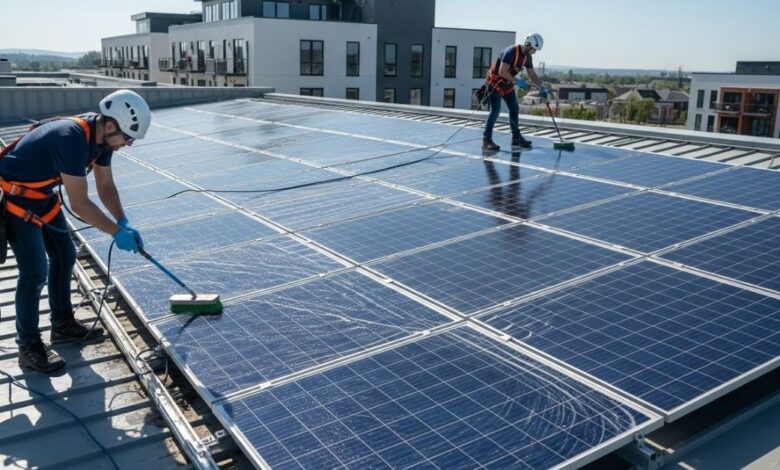
Solar panels are a long-term investment designed to deliver clean and affordable energy for decades. However, dust, pollution, bird droppings, pollen, and other debris can significantly reduce their efficiency over time. That’s where professional solar panel cleaning comes in. Unlike basic DIY washing, professional cleaning follows a systematic, safe, and highly effective process that protects your panels while restoring maximum performance.
In this article, we’ll explain how professional solar panel cleaning is done, step by step, and why it’s essential for maintaining optimal energy output.
Why Professional Solar Panel Cleaning Matters
Solar panels work by absorbing sunlight. When a layer of dirt or grime blocks the surface, less sunlight reaches the cells, reducing energy production—sometimes by 15–30% or more, depending on local conditions.
Professional cleaning ensures:
- Higher power output
- Longer panel lifespan
- Protection of warranties
- Early detection of damage or faults
- Safe and risk-free maintenance
Step-by-Step Process of Professional Solar Panel Cleaning
1. Initial Inspection and Site Assessment
Before cleaning begins, professionals conduct a visual inspection of the solar system. This includes:
- Checking for cracks, loose wiring, or damaged mounting structures
- Identifying heavily soiled areas
- Assessing roof access and safety requirements
This step ensures that cleaning is done safely and that existing damage is not worsened.
2. Safety Preparation
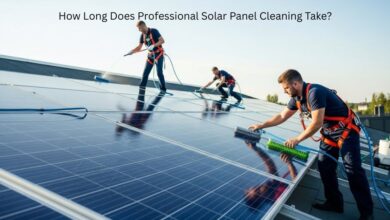
Safety is a critical part of professional solar panel cleaning. Technicians use:
- Safety harnesses and roof anchors
- Non-slip footwear
- Insulated tools
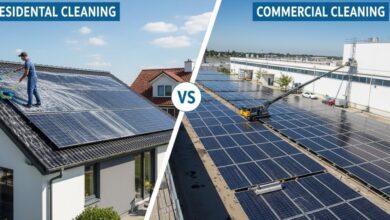
For commercial or large-scale systems, safety barriers and trained teams are deployed to minimize risk.
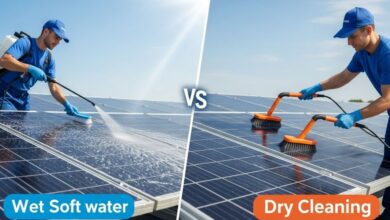
3. Use of Deionized or Purified Water
Professionals typically use deionized (DI) or purified water instead of regular tap water. This is important because:
- It contains no minerals or salts
- It prevents water spots and residue
- It leaves the panel surface crystal clear
This type of water cleans more effectively without the need for harsh chemicals.
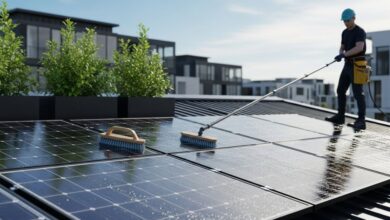
4. Soft Brush and Non-Abrasive Cleaning
Specialized soft-bristle brushes or microfiber pads are used to gently remove dirt. These tools are designed to:
- Avoid scratching the glass surface
- Clean evenly across the panel
- Reach edges and corners safely
Abrasive materials are never used, as they can damage the protective coating of the panels.
5. Low-Pressure Washing Technique
Professional cleaners apply low-pressure water flow to rinse away loosened dirt. High-pressure washing is avoided because it can:
- Damage seals and frames
- Force water into electrical components
- Reduce panel lifespan
The controlled pressure ensures effective cleaning without harm.
6. Eco-Friendly Cleaning Methods
Most professional services avoid strong chemicals. If required, they use:
- Biodegradable, eco-friendly solutions
- Panel-approved cleaning agents
This approach protects both the environment and the solar panel surface.
7. Spot Cleaning for Stubborn Stains
For bird droppings, tree sap, or sticky residue, technicians perform spot cleaning using:
- Extra-soft brushes
- Controlled soaking methods
This ensures complete removal without aggressive scrubbing.
8. Final Rinse and Quality Check
Once cleaning is complete:
- Panels are thoroughly rinsed
- Technicians perform a final visual inspection
- Any remaining marks or issues are addressed
Some professional services also compare pre- and post-cleaning output levels to demonstrate performance improvement.
How Often Do Professionals Clean Solar Panels?
The frequency depends on environmental factors such as dust, pollution, and rainfall. In general:
- Residential systems: Every 4–6 months
- Commercial or industrial systems: Every 2–4 months
- High-dust or polluted areas: More frequent cleaning may be needed
Professional Cleaning vs DIY Cleaning
| Aspect | Professional Cleaning | DIY Cleaning |
|---|---|---|
| Safety | High | Risky |
| Equipment | Specialized tools | Limited |
| Water quality | Deionized | Tap water |
| Risk of damage | Very low | High |
| Efficiency results | Maximum | Inconsistent |
Benefits of Professional Solar Panel Cleaning
- Increases energy efficiency
- Maintains manufacturer warranty
- Reduces long-term maintenance costs
- Prevents permanent stains and corrosion
- Saves time and effort
Final Thoughts
Understanding how professional solar panel cleaning is done highlights why it’s more than just washing panels with water. It’s a carefully planned process that combines safety, technology, and expertise to protect your investment and ensure peak performance.
If you want your solar system to operate efficiently year-round, professional cleaning is not an expense—it’s a smart maintenance decision that pays off in the long run.