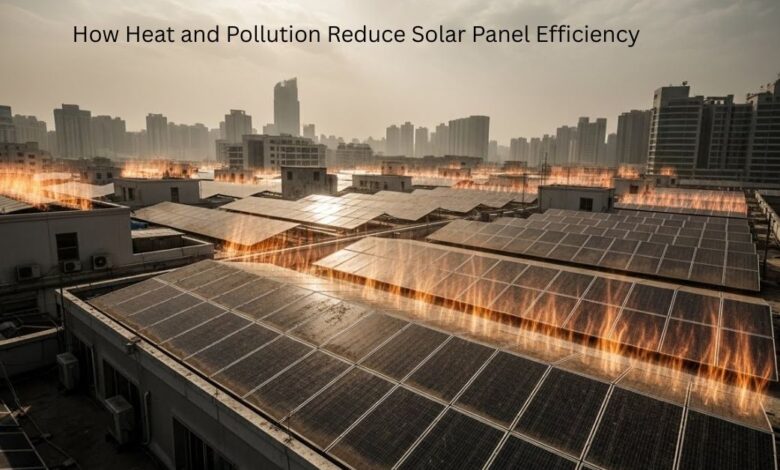
Solar energy is one of the most reliable and sustainable power sources available today. However, many people are unaware that environmental factors such as extreme heat and air pollution can significantly reduce the efficiency of solar panels. In regions with hot climates and high pollution levels, solar systems may not perform at their full potential if these factors are ignored.
This article explains how heat and pollution affect solar panel performance, why efficiency drops, and what can be done to minimize losses.
Understanding Solar Panel Efficiency
Solar panel efficiency refers to how effectively a panel converts sunlight into usable electricity. Most modern panels have an efficiency rate between 15% and 22%, but this rate is measured under standard test conditions, not real-world environments.
When temperatures rise or pollution increases, panels often operate under less-than-ideal conditions, causing noticeable energy losses.
How Heat Reduces Solar Panel Efficiency
1. High Temperatures Lower Voltage Output
Solar panels rely on sunlight, not heat, to generate electricity. When panel temperatures rise above 25°C (77°F), their voltage output begins to drop. For every 1°C increase, efficiency can decrease by 0.3% to 0.5%, depending on panel type.
In hot climates, panels can become much hotter than the surrounding air, leading to consistent power loss during peak summer months.
2. Overheating Affects Internal Components
Excessive heat can stress internal electrical components, including wiring and inverters. Over time, this thermal stress can:
- Shorten panel lifespan
- Increase maintenance needs
- Cause gradual performance degradation
3. Reduced Energy Production During Peak Sun Hours
Ironically, the hottest part of the day—when sunlight is strongest—can also be when panels operate less efficiently due to overheating. This results in lower energy production exactly when demand is highest.
How Pollution Reduces Solar Panel Efficiency
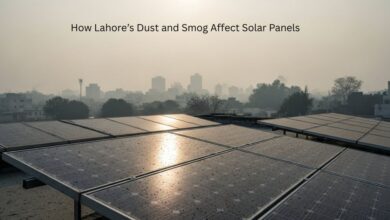
1. Dust and Smog Block Sunlight
Air pollution, including dust, smog, and industrial emissions, forms a layer over solar panels. This layer:
- Blocks sunlight from reaching solar cells
- Reduces energy absorption
- Lowers overall power output
In polluted areas, efficiency losses can reach 15% to 30% if panels are not cleaned regularly.
2. Permanent Residue and Chemical Damage
Pollutants mixed with moisture can create acidic residues that stick to panel surfaces. Over time, these residues may:
- Etch protective glass coatings
- Reduce light transmission
- Cause long-term efficiency decline
3. Reduced Solar Irradiance
Heavy pollution also affects the atmosphere by scattering and absorbing sunlight before it reaches the panels. This phenomenon, known as solar dimming, reduces the amount of usable solar radiation available for energy production.
Combined Impact of Heat and Pollution
When heat and pollution occur together, their effects compound:
- Hot temperatures reduce electrical efficiency
- Pollution limits sunlight availability
- Dirty panels heat up faster, worsening losses
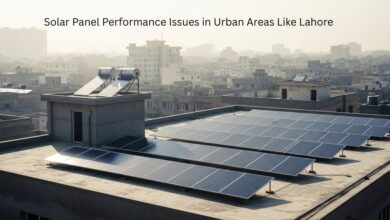
In urban and industrial regions, this combination can reduce solar output by up to 35% without proper maintenance and system design.
Ways to Minimize Efficiency Losses
1. Regular Solar Panel Cleaning
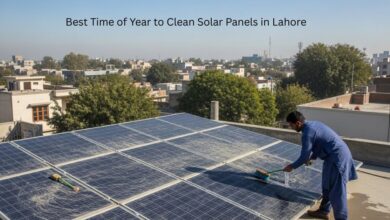
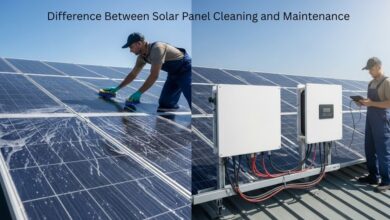
Cleaning panels removes dust, soot, and pollution buildup, restoring sunlight absorption and improving performance.
2. Proper Ventilation and Installation
Installing panels with adequate airflow underneath helps dissipate heat and prevent overheating.
3. Use High-Quality, Heat-Resistant Panels
Some panels are designed to perform better in high temperatures. Choosing panels with a low temperature coefficient can significantly reduce heat-related losses.
4. Routine Performance Monitoring
Monitoring energy output helps identify efficiency drops early, allowing timely cleaning or maintenance.
Conclusion
While solar panels are a powerful renewable energy solution, heat and pollution can significantly reduce their efficiency if left unmanaged. High temperatures lower voltage output, while pollution blocks sunlight and damages panel surfaces. Together, these factors can cause major energy losses, especially in hot and polluted regions.
With proper installation, regular cleaning, and smart panel selection, homeowners and businesses can minimize these effects and ensure their solar systems operate at peak performance for years to come.
Feature Image AI Prompt
“High-resolution realistic image of solar panels installed on rooftops under intense sunlight, surrounded by visible air pollution and smog, dusty panels reflecting heat waves, urban environment in background, dramatic lighting, environmental impact theme, professional photography style, ultra-detailed, 16:9 aspect ratio”