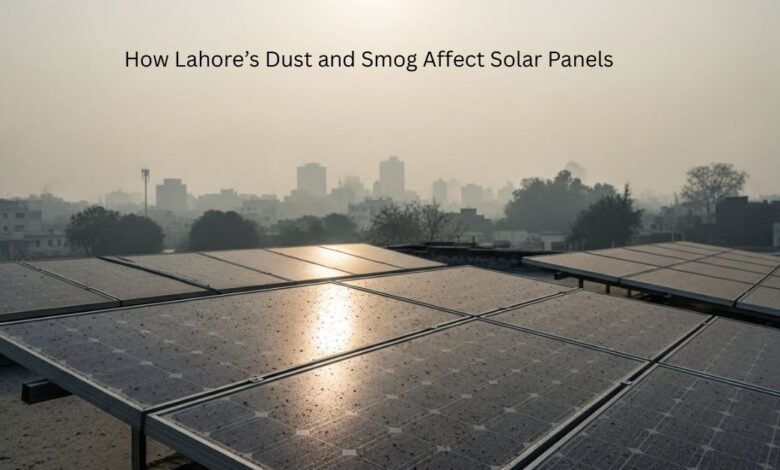
An in-depth, SEO-optimized, research-backed analysis
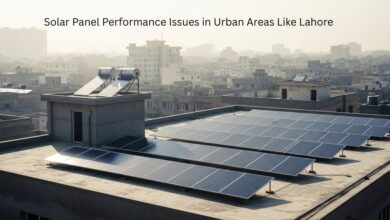
Lahore, one of Pakistan’s largest and most rapidly growing cities, has become synonymous with severe air pollution. Thick smog and dense dust clouds regularly blanket the city, especially during winter months, creating not only public health crises but also technical challenges for solar energy systems. As Pakistan accelerates its transition to renewable energy, understanding how Lahore’s air quality impacts solar panel performance is crucial for homeowners, businesses, and policymakers alike.
1. The Pollution Landscape in Lahore
Lahore experiences some of the highest levels of air pollution in the world, with frequent spikes in airborne particulate matter (PM2.5 and PM10) due to vehicle emissions, industrial smoke, construction dust, crop burning, and stagnant weather conditions. During peak smog season, air quality index (AQI) readings can exceed hazardous levels, forcing school closures and outdoor activity restrictions. AP News+1
This polluted atmosphere doesn’t only affect human health; it also interferes with any technology exposed to the air — including solar photovoltaic (PV) panels.
2. How Dust and Smog Reduce Solar Irradiance
Reduced sunlight penetration:
Solar panels generate electricity by converting sunlight into electrical energy. Dust particles and smog in the air scatter and absorb incoming sunlight before it reaches the panel’s surface. This reduction in solar irradiance — the sunlight that actually reaches the panels — directly lowers the output power of solar systems. Research shows that air pollution in heavily contaminated areas can reduce the sunlight input by up to 30%, depending on pollution intensity. Afinity MS
Surface soiling:
When dust and particulate matter settle on the surface of PV modules, they form a thin layer of grime that further blocks sunlight. Studies estimate that such dust deposition alone can reduce solar panel efficiency by around 10% to 40%, depending on dust density and exposure duration. MDPI
This soiling effect is influenced by particle size and composition, with finer particles causing more shading and energy loss than coarser grains. MDPI
3. Local Environmental Factors Amplifying the Problem
Winter smog season:
In colder months, cooler air traps pollutants near ground level, intensifying smog. This thick layer of pollutants significantly reduces visibility and incoming solar radiation. Pakistan Today
Construction dust and urban growth:
Lahore’s rapid urbanization includes widespread construction and road work, which generates large amounts of dust. Without effective containment measures, this dust adds to the smog and continues to settle on exposed solar installations. The Express Tribune
4. Heat Effects and Panel Efficiency
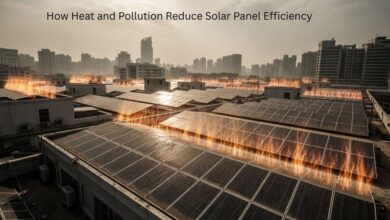
Smog and dust can also contribute to the urban heat island effect — a phenomenon where built-up areas retain more heat. Elevated ambient temperatures reduce solar panel efficiency since most PV technologies produce less power at higher operating temperatures. For every degree Celsius above the optimal operating temperature, efficiency can drop by approximately 0.5%. Afinity MS
This combined heat and pollution effect means that panels in Lahore face both irradiance loss and thermal performance degradation.
5. Long-Term Material Damage
Pollutants such as sulfur dioxide (SO₂) and nitrogen oxides (NOₓ) can combine with moisture to form acidic compounds, which may contribute to surface erosion and long-term degradation of solar panel materials. Over time, this can shorten the lifespan of PV systems and increase maintenance costs. Afinity MS
6. Economic Impacts for Solar Users in Lahore
Reduced energy output means solar installations generate less power than their rated capacity. This has several economic implications:
- Lower return on investment (ROI): Reduced generation translates to longer payback periods for solar systems.
- Higher maintenance costs: Frequent cleaning and repairs may be required to restore performance.
- Performance unpredictability: Fluctuating pollution levels make energy yield less consistent, complicating financial modeling for solar projects.
7. Mitigation and Best Practices
Regular cleaning:
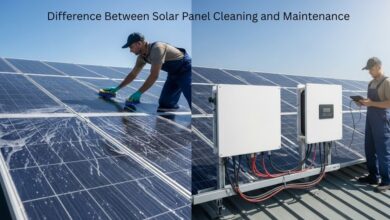
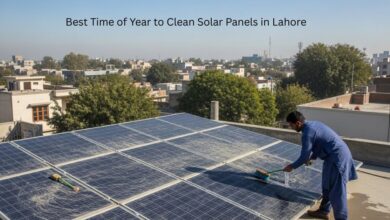
Dirty panels can lose significant output. In Lahore’s dusty environment, monthly cleaning — or more frequent during heavy smog — can improve performance noticeably. Afinity MS
Tilt and placement optimization:
Panels installed at optimal tilt angles are less likely to accumulate dust compared to horizontal surfaces. MDPI
Advanced coatings and technologies:
Anti-reflective or self-cleaning coatings can help reduce dust adhesion, while autonomous cleaning systems provide automated maintenance for larger installations. MDPI
Atmospheric pollution control:
While solar users can mitigate on-site soiling, broader air quality improvements — such as regulating vehicle emissions, controlling industrial outputs, and enforcing construction dust standards — will benefit all residents and solar infrastructure.
8. Conclusion
Lahore’s pervasive dust and smog present significant challenges for solar panel performance. From sunlight attenuation and surface soiling to heat effects and material degradation, multiple mechanisms combine to reduce energy output and shorten panel lifespan. Awareness of these challenges is vital for solar system owners, energy planners, and environmental policymakers.