Why this guide is Lahore-specific
Lahore’s climate has distinct seasons — a hot pre-monsoon dusty period, a wet monsoon, and a winter smog/fog season — and each affects solar panels differently. Cleaning schedules and techniques that work in temperate or dry climates need adjusting for Lahore’s dust, heavy monsoon rains, and winter pollution. Wikipedia+2Pakistan Meteorological Department+2
Quick summary (for skim-readers)
- Most important months to clean: end of pre-monsoon (May–June), after the monsoon (September–October), and after heavy winter smog episodes (Nov–Feb).
- Typical frequency: 2–4 times/year for rooftop systems in Lahore, more often (monthly) for ground-mounted or heavily soiled locations.
- Best time of day to clean: early morning (before 9 AM) or late afternoon (after 4 PM) when panels are cooler.
- DIY vs pro: small systems — DIY OK with correct safety steps; large/roof/tilt systems — hire professionals.
- Signs panels need cleaning: visible dust film, drop in daily energy output vs expected, water beading that won’t run off, bird droppings or leaf build-up.
Understanding Lahore’s seasons and how each affects soiling
- Pre-monsoon / hot & dusty (spring → early summer, ~April–June): strong winds and dust storms increase airborne dust deposition on panels, forming a thin gritty layer that reduces light transmission. PM and dust loading is particularly high in pre-monsoon months. Pakistan Meteorological Department+1
- Monsoon (July–September): heavy rains can wash away loose dust but often leave mud splatter and hard water mineral deposits in areas with dusty rain or later drying. Monsoon storms may also drop leaves and organic debris. Wikipedia
- Autumn (Sept–Nov): generally drier; a good window for a thorough cleaning and inspection after monsoon. Wikipedia
- Winter / smog & fog season (Oct–Feb): crop burning, vehicle and industrial emissions and temperature inversion trap pollutants — results in persistent smog (high PM2.5) that forms a film on panels, often sticky and greasy, requiring more thorough cleaning. Winter smog episodes can be severe in Lahore. IQAir+1
How often should you clean (Lahore-specific recommendations)
These are practical guidelines — adjust by actual soiling and energy loss:
- Low-soil locations / rooftop with 20–30° tilt: 2 times/year (post-monsoon + end of winter).
- Typical urban Lahore rooftop: 3 times/year — end of pre-monsoon (May/June), post-monsoon (Sept/Oct), and mid-winter after smog peaks (Dec/Jan).
- High-soiling locations (near construction, dusty roads, ground-mounted): every 1–2 months during dusty seasons; monthly checks in winter smog.
- If you monitor production: clean when measured production drops by >5–7% vs expected under similar irradiance conditions (compare same day last week or modelled yield).
The seasonal rhythm above reflects Lahore’s dust storms (pre-monsoon) and winter smog peaks; monitoring will give the final answer for your site. Pakistan Meteorological Department+1
Signs your panels need cleaning
- Daily energy yield drops while irradiance/weather is similar.
- Visible gray/brown film, streaks, or bird droppings.
- Water forms beads and dries leaving white mineral rings (hard water deposits).
- Shading from accumulated leaves or debris at panel edges.
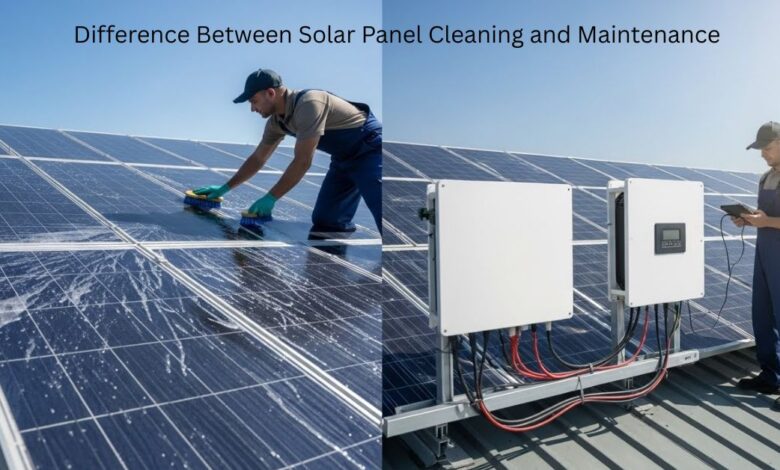
DIY cleaning: step-by-step (safe & effective)
Safety first: never work on a roof alone, use fall protection, and avoid cleaning in the hottest midday hours. If panels are on steep roofs, hire pros.
- Turn the system off following inverter shut-down procedure (consult installer).
- Choose the time: early morning or late afternoon when panels are cool. Avoid cleaning during rain or while panels are under load.
- Gather tools: soft long-handled brush or sponge (microfiber), extension pole with soft head, hose with gentle flow (no high-pressure washers), bucket, mild dish soap (sparingly). Do not use abrasive pads, strong detergents, or solvents.
- Rinse first: use hose to wet panels and loosen dust. In Lahore, initial rinse removes loose sand/grit from dust storms.
- Gentle wash: mix a few drops of mild soap in bucket of clean water, wipe with soft sponge/top to bottom, avoid scrubbing hard.
- Final rinse: use clean water to remove soap, then squeegee or soft microfiber to avoid water spots. Deionized water reduces mineral spotting if available.
- Dry & inspect: check for micro-cracks, loose clamps, bird nests, or shading changes.
Note on pressure washers: avoid them unless set to very low pressure and used at a distance — high pressure can damage modules and seals.
When to hire professionals
- Panels on multi-storey roofs or steep angles.
- Large systems where downtime or warranty considerations apply.
- Persistent sticky smog films that need specialized detergents and deionized water.
- If you prefer scheduled maintenance and performance guarantees.
Professional crews typically use soft brushes, deionized water, and safe roof harnessing. For smog-heavy cleaning, professionals can reduce re-soiling by applying specific rinse techniques (ask them what they use).
Tools, materials and what to avoid
Best: soft microfiber, squeegee, long extension pole, deionized/filtered water, mild biodegradable soap.
Avoid: abrasive scouring pads, strong acids/alkalis, window cleaning chemicals with ammonia, high-pressure washers near module frames, metal tools that can scratch glass.
Special tips for Lahore-specific problems
- Dust storms (pre-monsoon): after a major storm, rinse panels quickly to remove abrasive grit before it embeds in the surface. Re-clean within 1–2 weeks if a gritty film persists. Pakistan Meteorological Department
- Monsoon mud: after heavy rains that mix dust and water, perform a full cleaning to remove mineral and organic deposits before they harden. Wikipedia
- Winter smog: films from smoke and vehicle emissions can be oily/sticky — these may need a two-step cleaning (soap + dilute isopropyl rinse or deionized water) — ideally done by pros to avoid damaging anti-reflective coatings. Monitor production during smog episodes; clean promptly if output drops. IQAir+1
- Bird droppings: spot clean quickly; droppings are acidic and can etch glass if left.
Preventive measures to reduce cleaning frequency
- Tilt angle & mounting: steeper tilt helps rain wash panels; if installing new arrays, favor steeper tilt where feasible. Wikipedia
- Anti-soiling coatings: some coatings reduce dust adhesion; check compatibility with your module warranty before applying.
- Bird deterrents & gutter screens: prevent nests and leaf build-up.
- Regular visual checks: quick monthly inspections during dusty/winter months to spot problems early.
- Smart monitoring: an energy monitor or inverter logging will show production dips and indicate cleaning needs.
Environmental & warranty considerations
- Water use: use water responsibly—use bucket and hose, or reclaimed/deionized water when possible. Avoid detergents that harm the environment.
- Warranty: check module warranty for cleaning restrictions (some manufacturers specify allowed cleaning chemicals/tools). If in doubt, use manufacturer-recommended procedures.
Typical maintenance calendar for Lahore (practical plan)
- March–April: inspect and schedule cleaning at end of pre-monsoon if frequent dust accumulation.
- May–June: clean after peak dust season; important before monsoon rains.
- September–October: deep clean after monsoon to remove mineral deposits and organic debris.
- December–January: clean after major smog events; check again in February if smog persists.
Adjust frequency based on observed soiling and production logs.
Cost & time expectations (ballpark)
- DIY: 30–90 minutes for a small rooftop array; mostly labour and minimal supplies.
- Professional cleaning: varies widely — get quotes with explicit steps (water type, detergents, safety, insurance), and compare by cost per panel or per kW. (Local prices fluctuate—ask 2–3 local vendors and check references.)
Troubleshooting common problems
- After cleaning, output still low: check for shading, inverter issues, or module degradation. Compare irradiance values (or check the inverter log) to separate cleaning issues from electrical faults.
- Streaks or spots after cleaning: likely mineral deposits—re-clean using deionized water or a mild acid rinse by a professional.
- Damaged glass or delamination: stop using and contact installer/manufacturer; do not attempt repairs yourself.
Final checklist before you start
- System shut down? ✅
- Fall protection / ladder safety? ✅
- Soft non-abrasive tools only? ✅
- Weather suitable (no rain/high winds)? ✅
- Plan for waste water disposal? ✅